 Nafisa
Talking points from Leicester City’s 3-2 defeat to Sheffield United, looking at the start, the second-half response, Cifuentes’ future, the empty seats, and relegation
Marti Cifuentes was dumbfounded. “I don’t think I’ve ever seen that before,” he said of watching his Leicester City side go two goals down inside four minutes.
He was perhaps alone in his bewilderment. For City fans, it didn’t seem that farfetched. They saw their team concede after 10 seconds at Everton in February and then trail 2-0 inside six minutes. At home to Newcastle in April, they were two goals behind after 11 minutes.
Yes, Saturday was a more rapid capitulation but it was hardly out of the ordinary.
In all of those games – on Saturday, against Everton and against Newcastle – City went on to let in a third before half-time. Throw in Tuesday’s match at Southampton, and last season’s embarrassments at home to Brentford and Wolves, then that’s six times they’ve been losing 3-0 at the break in less than 12 months.
So the first-half showing was not an outlier but the sort of performance that’s become all too common of late.
After the Southampton defeat, Cifuentes said the loss wouldn’t define City, but how they reacted would. Was that the true City on display against Sheffield United, then? One where they appeared to lack energy and motivation and were completely overwhelmed by their opponents?
Really, Cifuentes’ surprise over the speed of the first two goals was a surprise in itself. Because when asked why he thought his team had begun so poorly, he pointed to deep-seated problems, as if he knew City had a recent history of early calamities.

“Everybody knows why I’m here,” he said when asked to explain the slow start. “I came here to fix some issues. I never said those issues were easy to fix, and that it would be quick. I’m aware of the things we need to improve.”
Cifuentes didn’t explicitly say on Saturday what those issues were, but it would not be unfair to guess he’s referring to the culture around the club, something he’s mentioned frequently.
It does feel like the slow start might be a mentality issue, but it’s deciphering what exactly the problem is.
Is it fear of making mistakes? Is it fear of a negative reaction? Is the doom and gloom around the club seeping into the players? Do they simply not care?
Cifuentes has always denied the latter, but it remains a criticism that is often levelled at the squad by the fans.
It’s a barb that comes to the fore more often in games where loanee Jordan James is the star man. His all-action style naturally gives an impression that he cares more, but his demeanour and personality add to that feeling.
It’s not a good look for the squad if a player not even permanently contracted to the club appears to be trying harder than the others.
Those two fast goals mean City now have the joint-worst record in the division for the first 10 minutes of matches, with one goal scored and six conceded.
Cifuentes is right in that it’s something for him to fix, and it would have been hoped that he’d have made progress by now. But if it’s that deep-rooted, it’s also a problem for the people who assembled the squad, and those who steer the club from the very top.

Credit for second half must be tempered
In those five previous games in the past 12 months in which City have trailed 3-0 at half-time, they didn’t score a single goal. In some of the matches, they went on to lose 4-0.
So perhaps there should be some credit afforded to the manager and players for at least making a fist of a comeback attempt. It’s difficult to know how much credit though.
As Sheffield United boss Chris Wilder pointed out: “When you’re 3-0 down, the game becomes easy and you can afford to take risks because everybody thinks the game’s done and dusted.”
City did appear to be playing with a weight lifted off their shoulders. There was much more fluidity to their play, and much greater intent. It felt like the players wanted to get the ball forward more quickly.
But it also felt like Sheffield United retreated into a mindset of wanting to protect that lead. They definitely weren’t as adventurous, and that afforded City more control.
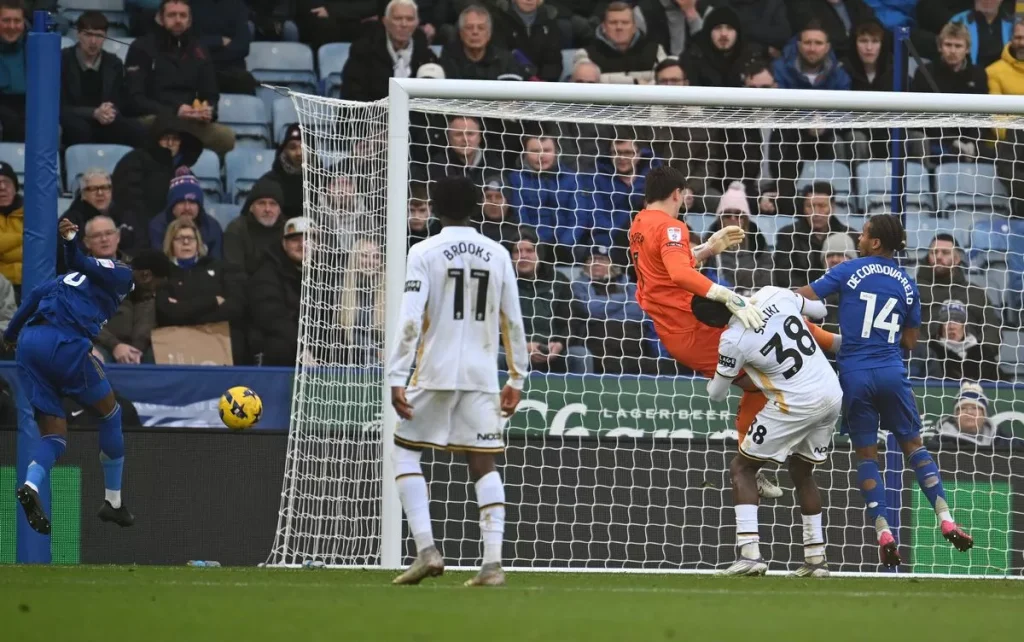
And how many good chances did they really create? At 3-1, there was only really Jannik Vestergaard’s bundled effort that Jairo Riedewald cleared near the line. After James made it 3-2, there was no final opportunity.
The stats say City created 1.2 expected goals in the second period, with more than half of that figure made up by Stephy Mavididi’s header. In normal circumstances, that’s pretty good. When an opponent lets you dominate, it’s only okay.
Substitutes Boubakary Soumare and Oliver Skipp had some of their best games in a City shirt. Soumare looked a level above Harry Winks in the way he controlled the match from the base of midfield, shrugged off Blades players and spread passes about the pitch.
Skipp, tasked with filling in at centre-back, was composed in defence and progressive on the ball. But these were unique circumstances where both players were under far less pressure than usual.
For how City meekly accepted defeat, or solely worked to keep the opposition’s score down, in those other matches in which they trailed 3-0 at the interval, praise can be afforded to the players for how they responded on Saturday.
It helps Cifuentes too. Watching that second half, it could not be said the players are downing tools on his watch.
But any credit afforded needs to be tempered by the circumstances of the game, and by the fact they were only quite good after the break, rather than excellent.
What Cifuentes’ £50m point shows after sack chants
When questions over a manager’s future are credibly asked, it can feel like the start of an unrecoverable situation.
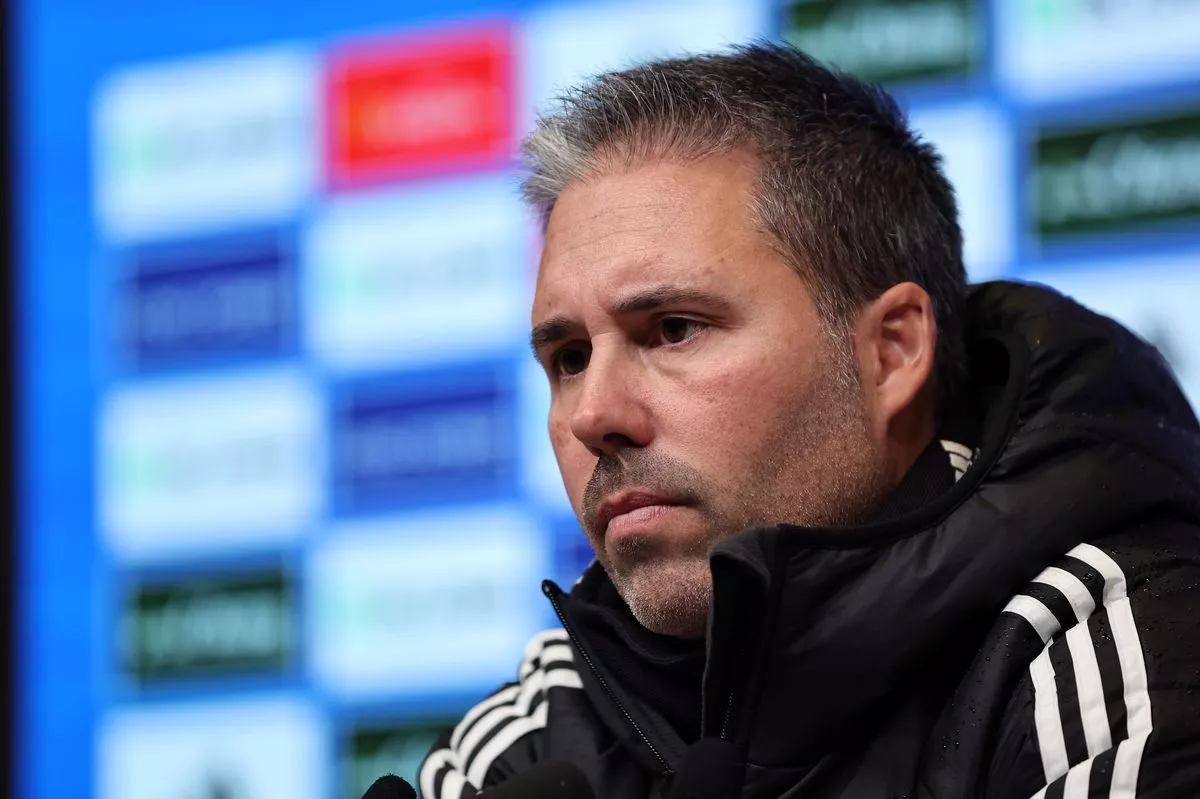
That a handful of City fans joined in with Sheffield United supporters’ sack taunt of Cifuentes just before half-time meant it was a valid topic of conversation in the post-match press conference. Later, the Spaniard was asked if he felt he had the support of the board.
It feels like a significant moment when that question first arises. No matter the confidence in the answer, it seems like a tipping point. Those doubts over a manager’s future tend to linger until they’re gone.
But Cifuentes was pretty bullish in his replies. He mentioned that he’s been in such situations and had such chants directed at him before and that he’s come through the other side.
He again set out the long-term nature of the “rebuild” at City and that he’s on a mission to fix the club. He spoke of his meetings with the chairman and director of football in which they collaborate on ideas to turn the club around, as if to point out they’re on his side.
He did also mention, unprompted, the lack of money spent at City in the summer compared to the £50m put into each of the squads at Southampton and Ipswich.
Cifuentes said: “Everyone knows that during this summer we tried to make certain decisions that were not easy. We didn’t spend money at all, while you see at Southampton and Ipswich, the other two clubs who were relegated, they spent a lot of money.”
It’s not an untrue statement from Cifuentes, but bringing it up felt a little like a move in self-preservation. All managers look to protect their reputation when under pressure and drop in those kinds of comments to let others know about the difficulty of the circumstances they’re working in.
Again, such comments feel significant. Once a manager starts fighting to protect themselves, it starts a direction of travel from which there’s rarely a u-turn.
But perhaps Cifuentes is right. The unusual circumstances at City, where there has been very little investment into the squad on his watch, means that patience will be shown.
Given the mood around the club and the staleness of the playing group, the pressure to succeed immediately may not be as high as it usually is at a relegated Premier League club in the Championship.
But what is true is that if Cifuentes wants to put an immediate halt to those chants and those questions, he needs a win at Derby.
Attendance slide may spark board concern
That’s the fourth straight home game in which the attendance has been under 30,000 and while the official figure against Sheffield United wasn’t as low as it was for the Blackburn and Middlesbrough games, a packed-out away end on Saturday suggested home ticket sales may have dropped, even if very slightly.

To the eye, it felt like there were plenty of empty seats. Perhaps there were a few season-ticket holders who didn’t turn up, but whose attendance is counted in the official figure.
There were definitely more than a few empty seats after the third Sheffield United goal went in, and many fans didn’t return after half-time.
To the naked eye, this felt like the earliest City fans had had enough. If the stadium was more than three-quarters full in the second half, that would be a surprise.
But maybe that will make a difference in forcing change. Even in the past few years, while there have been complaints around the running of the club and there has been a negativity seeping down from the stands, attendances haven’t really dropped.
Maybe to cut through to the businesspeople that run a football club, they need to see that punters simply aren’t turning up anymore.
When the official attendance is over 28,000, it probably won’t be an almighty panic at the moment. But there is a negative trend right now, and the club may be forced into action if they feel that slide could continue, or even become more severe.
City must consider relegation prospect
One of the big topics of conversation heading into Saturday’s game was the congestion in the Championship table.
City sitting 15th in the standings going into the final game of November seems like a problem. City sitting three points off the play-offs and six points off automatic promotion going into the final game of November doesn’t seem too concerning.
But another defeat changes the complexion again. The gap between City and the automatic promotion spots is now greater than the cushion they have to the relegation places.
With a potential points deduction to come, it’s not out of the realms of possibility to consider the club falling into League One.
The tendency is to look at the table and see how close City are to the play-offs, but they need to look over their shoulder too.
They know from the first Premier League relegation that simply believing a bottom-three finish is out of the question does not stop it from happening.
City better believe they’re in a relegation battle. That’s the only way to potentially stave it off.

 Nafisa